Hollywood rom-coms may have you thinking that the flutter in your chest is the beginning of your happily ever after. But what about those times when your heart skips a beat and romance isn’t the root cause?
Should you panic if your lub-dub lub-dub becomes a lub-dub LUB-dub?
If you’re feeling palpitations along with things like a high heart rate (110 beats per minute or higher), dizziness, chest pain or trouble breathing, talk with a healthcare provider or head to the emergency room. Otherwise, an occasional off-beat pitter-patter of your heart can be completely normal.
We helps unpack some of the common reasons your heart may occasionally beat to a different tune.
What are heart palpitations?
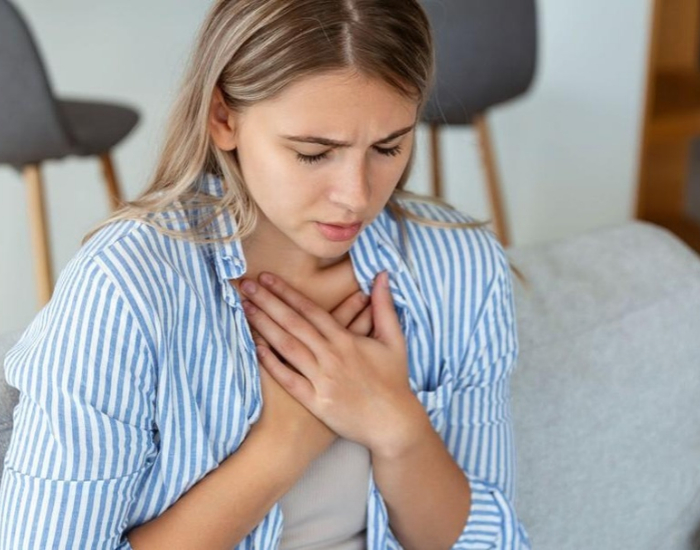
Heart palpitations are a short-lived change in your heart’s rhythm. Our heart is always pumping to move blood through our bodies, but we usually don’t feel it. So, when you suddenly notice your heart beating, it can be startling.
If you’re experiencing heart palpitations, it may feel like:
- An extra beat.
- Flip-flopping.
- Fluttering.
- Missing a beat.
- Pounding.
- Racing.
Missed beats in the upper chambers of your heart are called atrial ventricular complexes (AVCs). When they come from the bottom chambers of your heart, they’re called premature ventricular complexes (PVCs).
“Very frequent palpitations, when you’re having pounding sensations that happen multiple times a day, should be checked by a healthcare provider,” Our Dr says. “But if you’re feeling something like a fluttering or a flopping sensation once or twice a day with a normal heart rate, there could be something in your life that’s triggering it.”
Finding the trigger means you can avoid it and calm your fluttering heart.
What causes heart palpitations?
OK, so you felt a flutter, your heart rate is normal and you otherwise feel fine.
So, what might be causing your heart palpitation?
“Often, non-threatening heart palpitations are due to an increase in adrenaline levels in your body,” We notes. Adrenaline is the hormone that shifts your body into “fight or flight” mode. Adrenaline speeds up your heart to prepare your body when it senses a threat.
Our Dr explains some common causes.
1. Strong emotions
That head-over-heels falling-in-love feeling isn’t the only emotion that can make your heart race. (And, yes, it’s true that the feelings of nervousness and anticipation that can come with falling in love can, in fact, trigger your heart to skip a beat.)
Other strong emotions can cause heart palpitations as well, including:
- Anger.
- Anxiety.
- Fear.
- Nervousness.
- Panic.
- Stress.
“Oftentimes, our hearts begin to race when we’re feeling strong emotions or are feeling uncomfortable in a situation. That’s our sympathetic nervous system (fight or flight response) kicking in to help us defend ourselves from what it sees as a threat,” Our Dr explains. “That activation can cause the heart to jump a beat or flutter for a short time.”
He recommends calming those frayed nerves and getting your heartbeat back on track with deep breathing exercises and other relaxation techniques.
2. Over-caffeination
That double-espresso venti latte may not be doing your heart any favors. Researchers say that in at least one study, caffeine consumption was associated with a 54% increase in heart palpitations.
Caffeine is a stimulant. It wakes up your central nervous system, giving you a jolt and putting your body on high alert. But too many energy drinks, and your heart can go all a-twitter.
How much caffeine it takes to cause palpitations depends on your sensitivity to caffeine and other factors. Healthy adults should stick to no more than about four 8-ounce cups of brewed coffee a day.
3. Smoking
Like caffeine, nicotine is a stimulant that can raise your heart rate and cause palpitations. Nicotine, whether from cigarettes, cigars or e-cigarettes is addictive and dangerous for your heart, lungs and more.
Quitting smoking is one of the best ways to lower your risk of heart disease, cancer and other deadly conditions.
4. Pregnancy
When you’re pregnant, your blood volume increases a lot to support the growing fetus (we’re talking by about 50%). Your body has to work extra hard to move that blood around, which can lead to palpitations here and there. Pregnancy palpitations are very common, especially in the third trimester.
If you’re pregnant and experiencing palpitations, talk with your healthcare provider, especially if you have a heart condition or other health condition that could be related.
5. Arrhythmia
Now there’s a difference between a palpitation (a fleeting change in your heartbeat) and an arrhythmia, a heartbeat that’s too fast or too slow for a prolonged amount of time. Some arrhythmias can lead to stroke and heart failure.
Palpitations are the symptoms you may feel — the fluttering, the pounding and so on. Your heart rate tells you how quickly your heart is beating.
“Palpitations can have a number of causes that are not reasons to worry,”
If you’re feeling palpitations, We suggests checking your heart rate, either by feeling your pulse or by using a device like a smartwatch that has a heart rate monitor. A normal resting heart rate is usually between 60 and 100 beats per minute for adults.