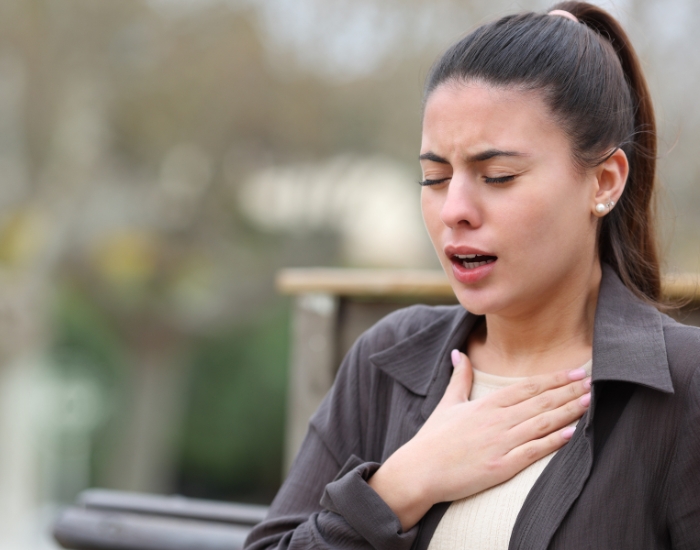
For many individuals, shortness of breath begins quietly—noticed only during routine activities like walking, climbing stairs, or light exertion. What is often dismissed as fatigue or aging can, in some cases, reflect deeper inefficiencies in how the body delivers oxygen.
In today’s evolving healthcare landscape, recognizing early symptoms and exploring non-invasive interventions has become essential. This article examines why shortness of breath during walking occurs, what it may indicate, and how counterpulsation therapy (EECP) is being used to support circulatory health in appropriate patients.
Understanding Breathlessness During Activity
Breathing is closely tied to how effectively the heart and lungs work together to supply oxygen to the body. During physical activity, oxygen demand increases. If circulation is compromised, the body compensates by increasing breathing effort.
Patients commonly describe this as:
- Feeling “out of breath” after minimal walking
- Needing frequent pauses during activity
- A sense of tightness or heaviness in the chest
- Reduced stamina compared to previous levels
From a clinical perspective, this symptom can be associated with cardiovascular conditions, reduced cardiac output, or inefficient oxygen delivery.
The Circulation-Oxygen Connection
At its core, shortness of breath during walking is often not just a lung issue—it is a circulation issue. The heart must pump efficiently, and blood vessels must deliver oxygen-rich blood effectively to tissues.
When this system is impaired, the result can be:
- Early fatigue during exertion
- Reduced exercise tolerance
- Generalized weakness
- Slower recovery after activity
This highlights a key insight in modern care: improving circulation can directly influence breathing efficiency and energy levels.
Moving Beyond Traditional Approaches
Conventional treatment pathways may include medications, lifestyle changes, and in some cases, invasive procedures. While effective for many, these approaches may not fully resolve symptoms for all patients.
A growing number of individuals are exploring adjunct, non-invasive therapies that aim to improve physiological function without surgery.
This is particularly relevant for patients who:
- Continue to experience breathlessness despite treatment
- Prefer non-invasive options
- Are not candidates for surgical intervention
- Seek improved quality of life and daily function
Counterpulsation Therapy: Supporting Natural Circulation
Counterpulsation therapy (EECP) represents a non-invasive method designed to enhance blood flow and reduce cardiac workload.
The therapy works by:
- Applying rhythmic compression to the lower extremities
- Synchronizing with the cardiac cycle
- Encouraging blood flow back toward the heart
Over time, this process may:
- Improve coronary perfusion
- Enhance oxygen delivery to tissues
- Promote development of collateral circulation
- Support more efficient cardiac function during activity
From a systems perspective, EECP focuses on optimizing the body’s existing circulatory pathways rather than replacing them.
Clinical Perspective and Observations
Research and clinical use of counterpulsation therapy have primarily focused on patients with chronic stable angina and circulation-related conditions. However, improvements in functional capacity and symptom relief have also been observed in patients experiencing exertional limitations.
Patients often report:
- Reduced shortness of breath during walking
- Increased walking distance without fatigue
- Improved overall endurance
- Better daily activity performance
While results vary, these outcomes suggest that enhancing circulation can play a meaningful role in symptom management.
The Patient Experience
One of the defining advantages of EECP therapy is its patient-friendly nature:
- Completely non-invasive
- No anesthesia required
- Conducted in a relaxed outpatient setting
- No recovery downtime
Sessions are typically structured and consistent, allowing patients to integrate therapy into their routine without major disruption.
Identifying When to Seek Evaluation
Shortness of breath during walking should not be overlooked, especially when it is:
- New or progressively worsening
- Occurring with minimal exertion
- Accompanied by chest discomfort or fatigue
- Limiting daily activities
Early evaluation allows for identification of underlying causes and exploration of appropriate treatment pathways.
Local Access to Circulation-Focused Care
For individuals in Stafford, Sugar Land, and the greater Houston area, access to non-invasive circulation therapies is becoming increasingly relevant.
At Emma Clare Med Spa, counterpulsation therapy is offered as part of a broader commitment to patient-centered wellness and circulatory support.
The approach includes:
- Personalized consultation and symptom assessment
- A focus on improving functional outcomes
- Integration with overall health and lifestyle strategies
- A comfortable, supportive treatment environment
This model reflects a broader trend in healthcare—prioritizing patient experience while leveraging advanced, non-invasive technologies.
A Shift Toward Functional Improvement
Modern care is no longer solely focused on treating disease—it is increasingly focused on improving how patients feel and function in daily life.
Shortness of breath during walking is a symptom that directly impacts quality of life. Addressing it through improved circulation represents a meaningful step toward restoring independence and confidence in daily activities.
Final Thought
Breathlessness during routine movement is not something to ignore. It may be the body’s early signal that circulation and oxygen delivery need attention.
By combining early awareness with appropriate medical guidance and exploring supportive therapies like counterpulsation, patients can take proactive steps toward better health and improved daily function.
Disclaimer: This content is for informational purposes only and does not constitute medical advice, diagnosis, or treatment. Counterpulsation therapy (EECP) is not a substitute for emergency care or standard medical treatment. Individuals experiencing severe shortness of breath, chest pain, or sudden symptoms should seek immediate medical attention. Always consult a qualified healthcare provider to determine the most appropriate care for your condition.